
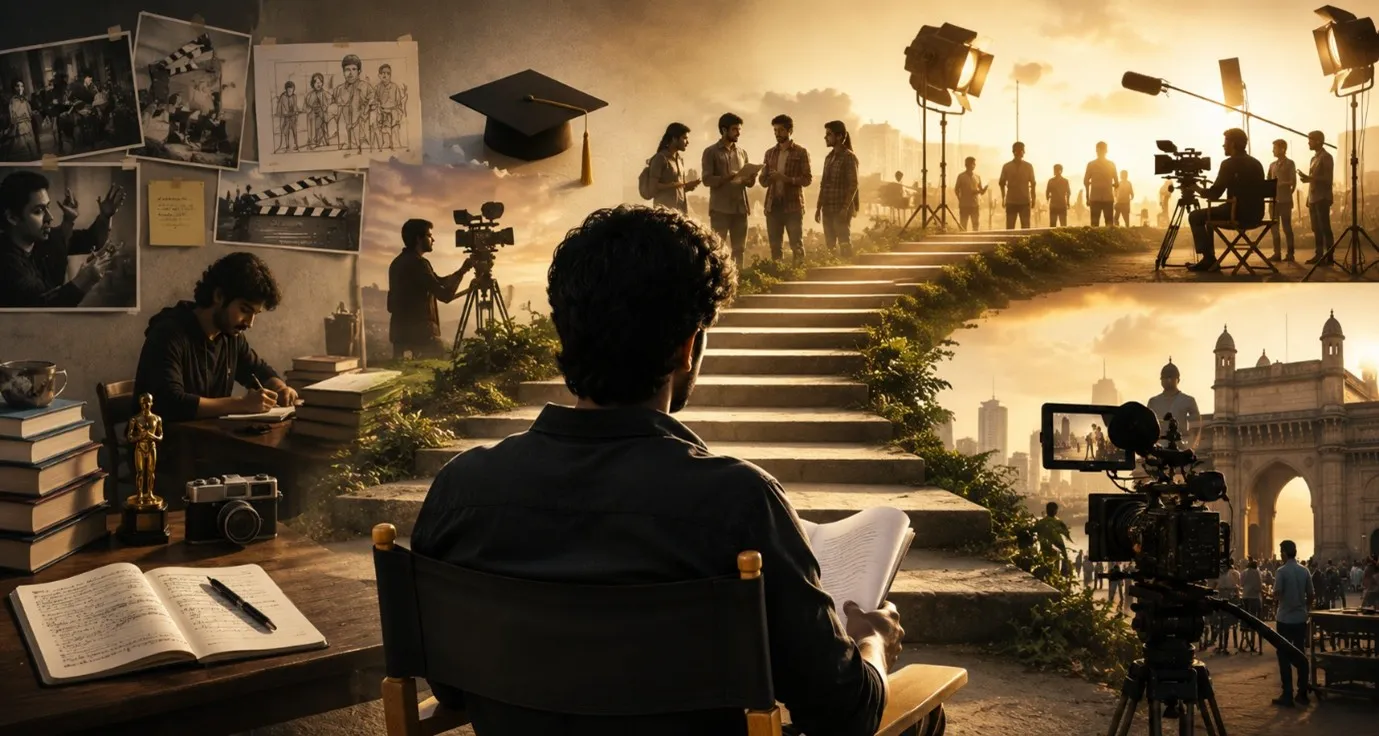
The digital video market in India is reportedly expanding at a high rate, as per the recent reports in the entertainment industry. Streaming sites are providing more chances to new directors and filmmakers. Most of the students seeking weekend filmmaking courses in Noida seek a practical road map in order to become successful in the film industry.
The trip may be daunting to the novices. There are a lot of prospective directors with a lack of industry knowledge and a career path. Others are also concerned with having to juggle between education, employment and filmmaking practice.
This guide provides a step-by-step procedure for becoming a film director in India. You will acquire the necessary skills, career phases, portfolio management, and learning techniques. You will also learn how GKFTII helps in aiding the upcoming filmmakers with professional training.
Film direction is based on storytelling. Strong narratives lead to the guidance of emotions, scenes, and audience engagement by the directors. Novices are advised to watch movies and examine the structure of scenes. The creative judgement is enhanced by understanding characters, pacing, and emotional flow.
Short stories and scripts also assist students in thinking visually. Most of the successful directors began with the simple storytelling exercises prior to managing productions. Script development workshops are usually part of filmmaking classes in Noida to learn on the job.
These competencies enhance the guiding confidence and creative clarity in productions.
To be a film director, one needs technical knowledge as well as creativity. Students need to learn about cameras, lighting, editing and planning of production. Hands-on workshops enable the students to get a feel of the actual production settings. Short film projects enhance leadership and decision-making. In GKFTII, the students are exposed to real-life experiences in terms of studio projects and guided filmmaking exercises.
| Skill Area | Why It Matters |
|---|---|
| Camera Basics | Better visual planning |
| Editing Knowledge | Improved storytelling flow |
| Lighting Setup | Stronger scene quality |
| Sound Understanding | Better audience experience |
| Production Planning | Efficient shoot management |
Weekend programmes assist students in managing learning and studies or employment.
The majority of the directors start as assistant directors. This position educates on production discipline and on-set coordination. During shoots, assistant directors are in charge of schedules, communication, and production support. Students are taught the workings of professional film sets under deadlines.
Problem-solving and teamwork skills are enhanced by real industry experience. It also assists students in establishing good working connections. Noida is home to many students who are undertaking weekend filmmaking courses and use internships to get a hands-on experience in directing independent projects.
A professional portfolio assists directors in demonstrating creativity and technical knowledge. Social media projects, short films and advertisements are effective in enhancing portfolios. Students must begin with small projects with available resources. Practical experience is also enhanced through smartphone filmmaking and short documentaries.
Short movies are a good illustration of storytelling and directing skills. Students can experiment with genres and visual styles through these projects.
The music videos enhance the rhythm and visual creativity of editing. The advertisement projects also enable the students to learn the commercial filmmaking techniques.
The creation of digital content enhances uniformity and comprehension of the audience. YouTube and Instagram filmmaking projects are now starting with many directors.
GKFTII provides professional advice to the students to create industry-ready portfolios.
To be a film director,one needs to be patient, creative and keep on learning practically. Good narration and exposure to the industry are still critical to success in the long run. Structured practical training and mentorship can be enjoyed by students seeking weekend filmmaking classes in Noida. Learn professional filmmaking programmes at GKFTII and reserve a demo session.