
As per the recent reports in the media industry, the demand for video content is ever-increasing. Online studios and streaming services are in need of talented artists and designers. Numerous students want to pursue a filmmaking course in Noida, and they are torn between the careers of filmmaking and cinematography.
It is easy to get lost when one is a beginner. The two professions collaborate closely in the production. However, their duties, artistic dominance and technical orientation are very different. The scope of career, increase in salary and prospects in the long run are some of the issues that students are usually concerned about.
This blog describes the distinction between cinematography and filmmaking easily. You will know career positions, skills needed, salary potential and demand in the industry. You will also learn how GKFTII helps to enhance applied media education in Noida.
What Does a Filmmaker Actually Do?
A director is in charge of the entire narration. This position is a combination of creativity, planning, leadership and production management. Directors make decisions on scripting, directing, casting, budgeting and editing.
They lead the whole project from the idea to the ultimate release. This profession requires excellent communication and leadership abilities. Filmmaking course in Noida is a career of interest to students who are interested in storytelling. They like imaginative planning and the participation of the audience.
Key Responsibilities of Filmmakers
A film production course assists the students in acquiring practical production processes. On-the-job exposure in the studio enhances industry preparedness.
How Is Cinematography Different from Filmmaking?
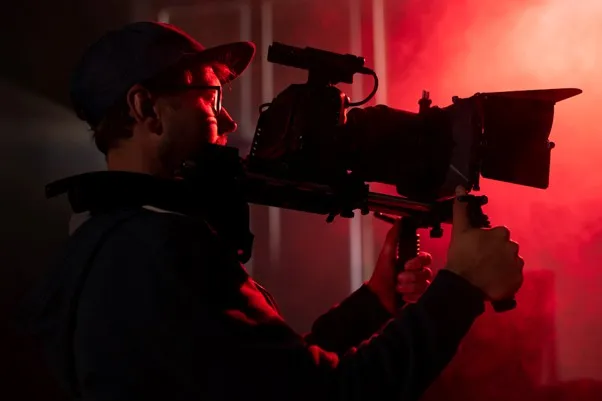
Cinematography is concerned with storytelling using cameras and light. Cinematographers are the ones who make the mood and cinematic style of the films. They collaborate with the directors to effectively capture scenes. Their major duties are camera angles, lens selection, lighting systems and motion. Cinematography is a popular major among students who like photography and technical ingenuity.
| Feature | Filmmaking | Cinematography |
|---|---|---|
| Main Focus | Story and direction | Visual presentation |
| Core Skills | Leadership and planning | Camera and lighting |
| Work Area | Entire production | Visual execution |
| Creative Role | Overall vision | Visual mood creation |
| Technical Demand | Medium | High |
Which Skills Matter Most for Each Career?
These two careers involve creativity and discipline. Their priorities for skills are, however, different. Moviemakers require leadership, narrative, communication, and project management skills. They need to organize teams when there is pressure. Cinematographers need technical skills and aesthetic knowledge. Framing, lighting, colour balance and camera movement are important elements that one has to know.
Important Skills Comparison
Filmmaking Skills.
Cinematography Skills.
Students who are seeking a course in filmmaking in Noida ought to consider their inherent interests prior to making a decision on a specialisation.
Cinematography and filmmaking provide exciting, creative jobs. The two occupations demand commitment, on-the-job training, and lifelong learning. Students are to select according to their interests and creative abilities. Individuals who want to have professional exposure in the industry can consider the training opportunities in GKFTII. Get a demo session today and start your career in the media.